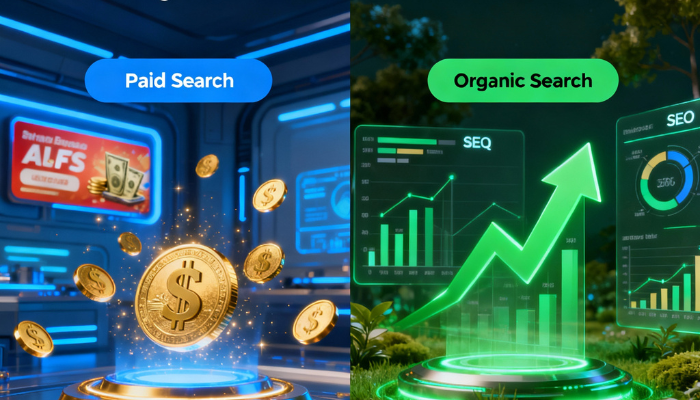
In today’s digital landscape, visibility is everything. Whether you’re running an online business, managing an e-commerce store, or building a personal brand, showing up on Google’s first page can make or break your online success. With innovations like Google SGE in 2025 shaping the future of search, it’s becoming more important than ever to understand how AI-driven algorithms impact rankings and visibility.
That’s where the debate of Paid vs Organic Search comes in. Both strategies are essential pillars of digital marketing — but the real challenge lies in striking the right balance between them. Platforms like Sikaami often emphasize that combining both can help marketers maximize visibility, ROI, and long-term growth.
What Is Organic Search?
Organic search refers to the traffic your website earns naturally — without paid promotions. When users discover your content through search results because of effective SEO, quality writing, and authority, that’s organic visibility in action.
Organic success is built on patience and consistency. Brands like Sikaami, for example, invest in content-driven strategies to achieve steady, sustainable results through organic optimization.
What Is Paid Search?
Paid search, or PPC (Pay-Per-Click), involves paying search engines like Google to display your ads at the top of search results. Using tools such as Google Ads, you can target specific keywords, audiences, and locations for immediate exposure.
Paid search is ideal for fast results, product launches, and time-sensitive promotions — but it can’t replace the lasting value of a strong organic foundation.
Paid vs Organic Search: How to Build the Right Strategy
Balancing Paid vs Organic Search is about combining the speed of paid marketing with the sustainability of SEO. Neither should stand alone — they work best when used together strategically.
1. Use Paid Search for Immediate Traffic
Launching a new website or product? Paid ads can help you gain quick visibility while your organic rankings are still building.
2. Invest in Organic SEO for Long-Term Results
Publish optimized blogs, strengthen on-page SEO, and build backlinks to create a steady flow of organic traffic that continues long after your ad budget ends.
3. Combine Paid Ads with High-Competition Keywords
If ranking organically for competitive keywords is difficult, use paid campaigns to capture that search demand instantly.
4. Retarget Organic Visitors with Paid Campaigns
Paid ads can re-engage users who visited your website organically but didn’t convert — improving conversion rates.
5. Track Both Channels Together
Use hybrid reporting tools to analyze how paid campaigns influence organic engagement and vice versa. This helps you allocate budgets more intelligently.
Why a Balanced Approach Wins
Paid search offers speed and precision, while organic search builds trust and longevity. Businesses that balance both enjoy the best of both worlds — short-term performance boosts and long-term brand growth.
Your ideal ratio depends on your goals and budget:
- New websites: Start with 70% organic focus, 30% paid for traffic boosts
- Established brands: Maintain 60% organic, 40% paid for consistent visibility
Conclusion
When it comes to Paid vs Organic Search, success isn’t about choosing one over the other — it’s about integrating both strategically. Organic SEO gives your brand credibility and stability, while paid campaigns bring quick wins and data-driven insights.
Start by building a strong content foundation with SEO, and use paid search to amplify reach when needed. Over time, monitor results and adjust your strategy to find the sweet spot for your business.
For more expert insights on SEO, PPC, and digital marketing strategies, visit Sikaami and stay ahead in the evolving world of search marketing.
FAQs
Q1. What’s the key difference between organic and paid search?
Organic search is unpaid visibility achieved through SEO, while paid search involves paying for ads to appear in search results.
Q2. Which works better: paid or organic search?
Both serve different purposes. Paid search is ideal for fast results, while organic SEO delivers consistent, long-term growth.
Q3. Does paid search help improve organic ranking?
Not directly. However, running ads increases brand exposure, which can lead to higher organic clicks and better engagement metrics over time.
One thought on “Paid vs Organic Search: Finding the Perfect Balance for Online Success”